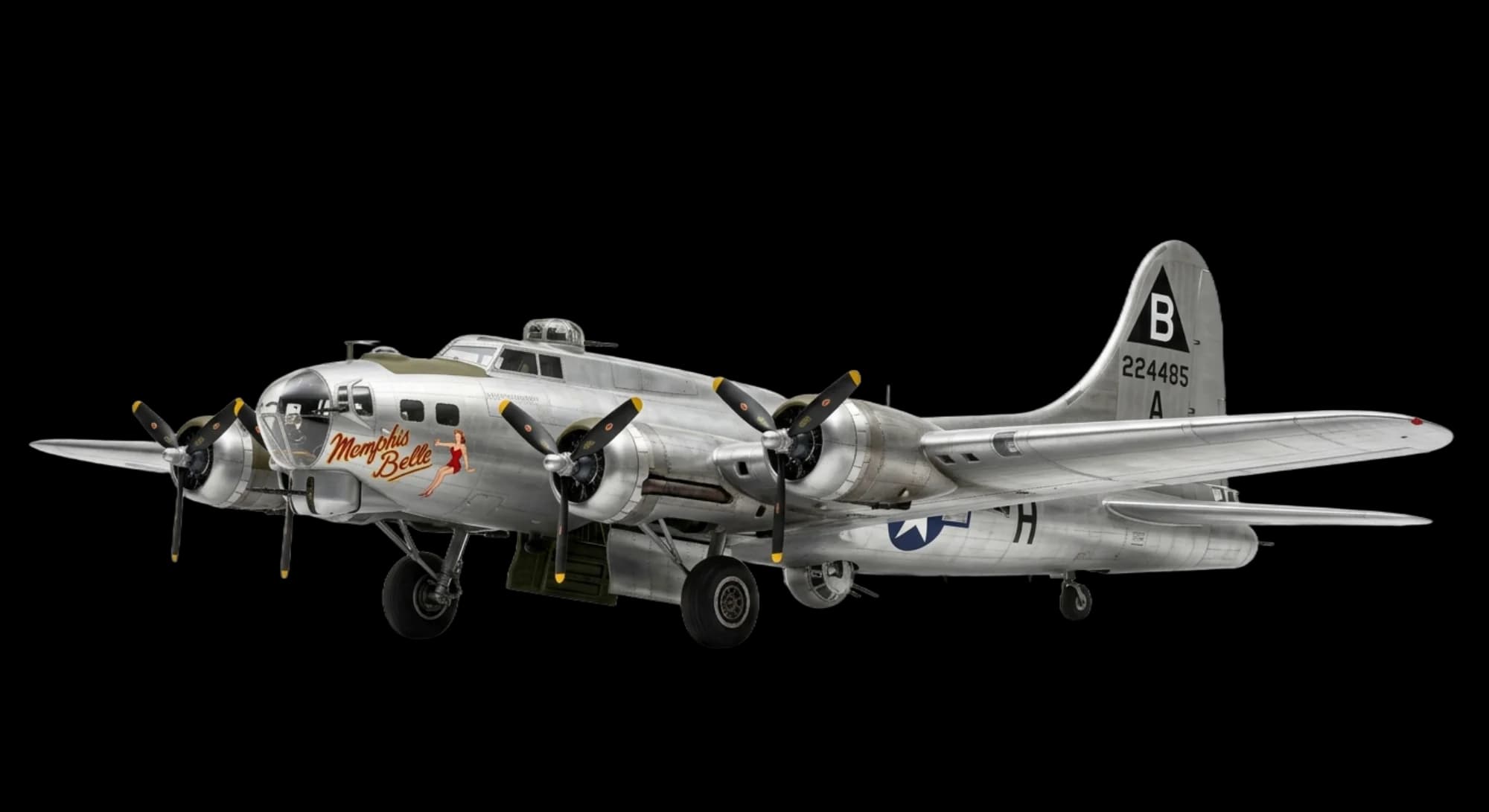
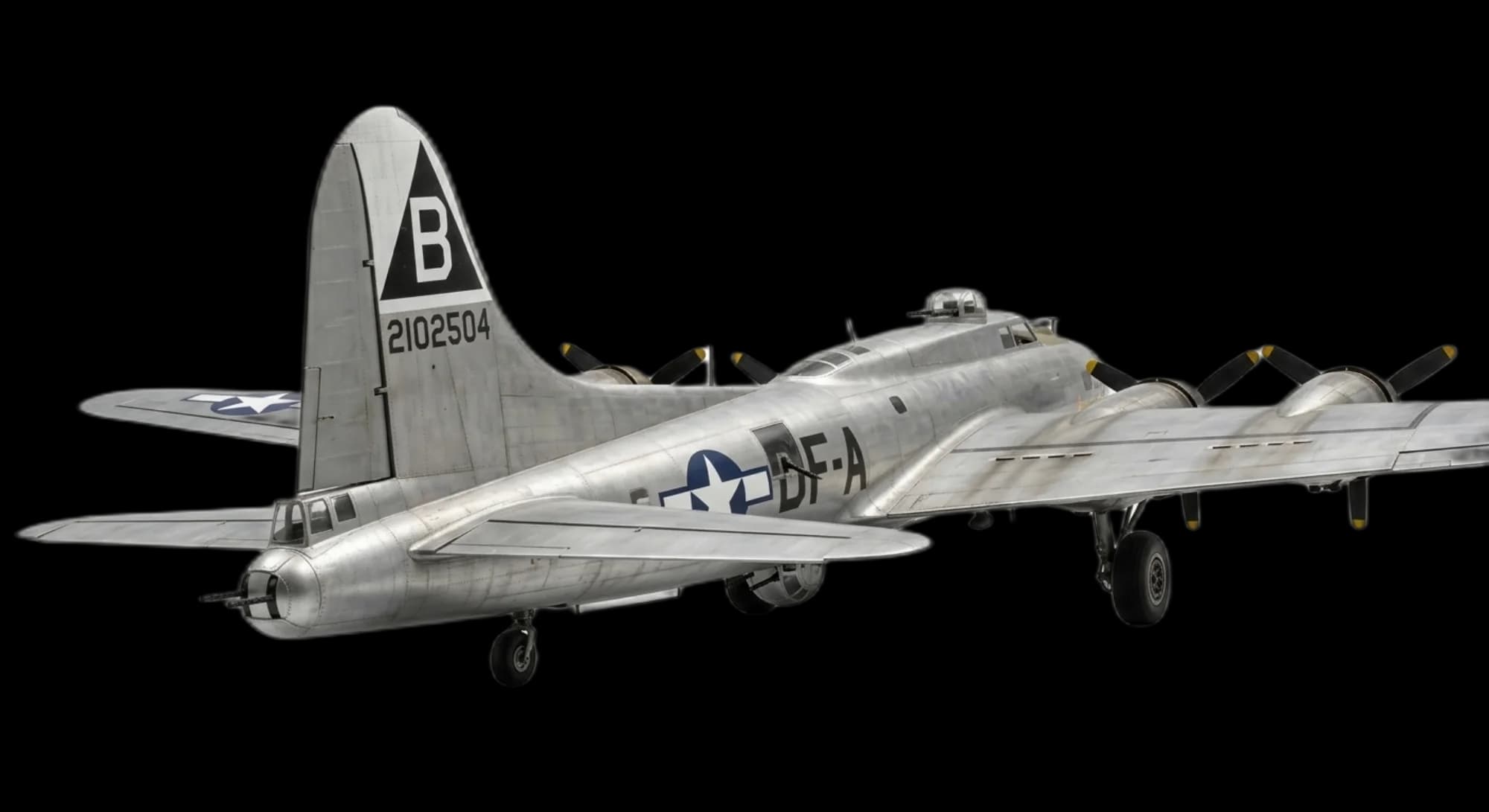
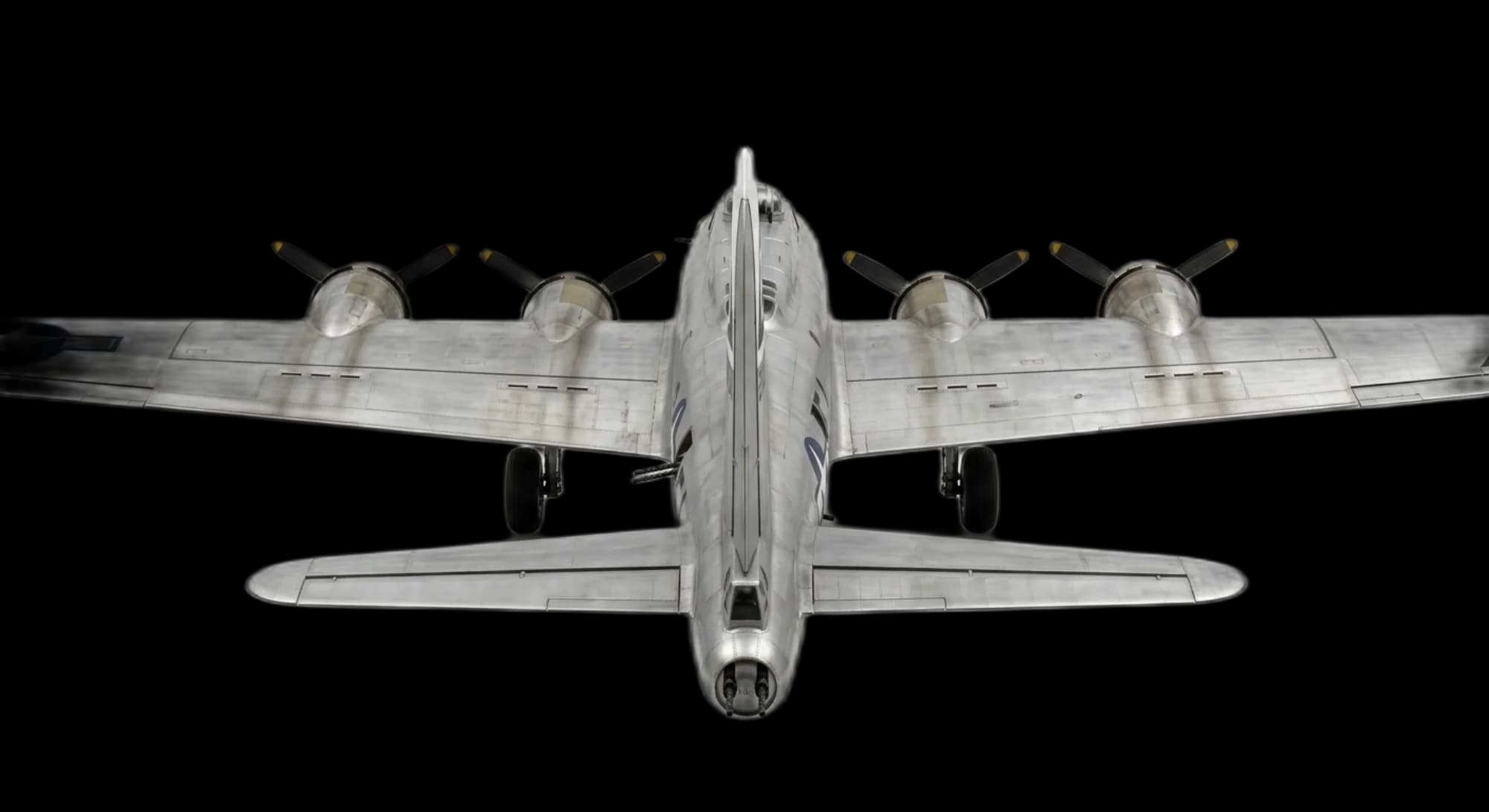
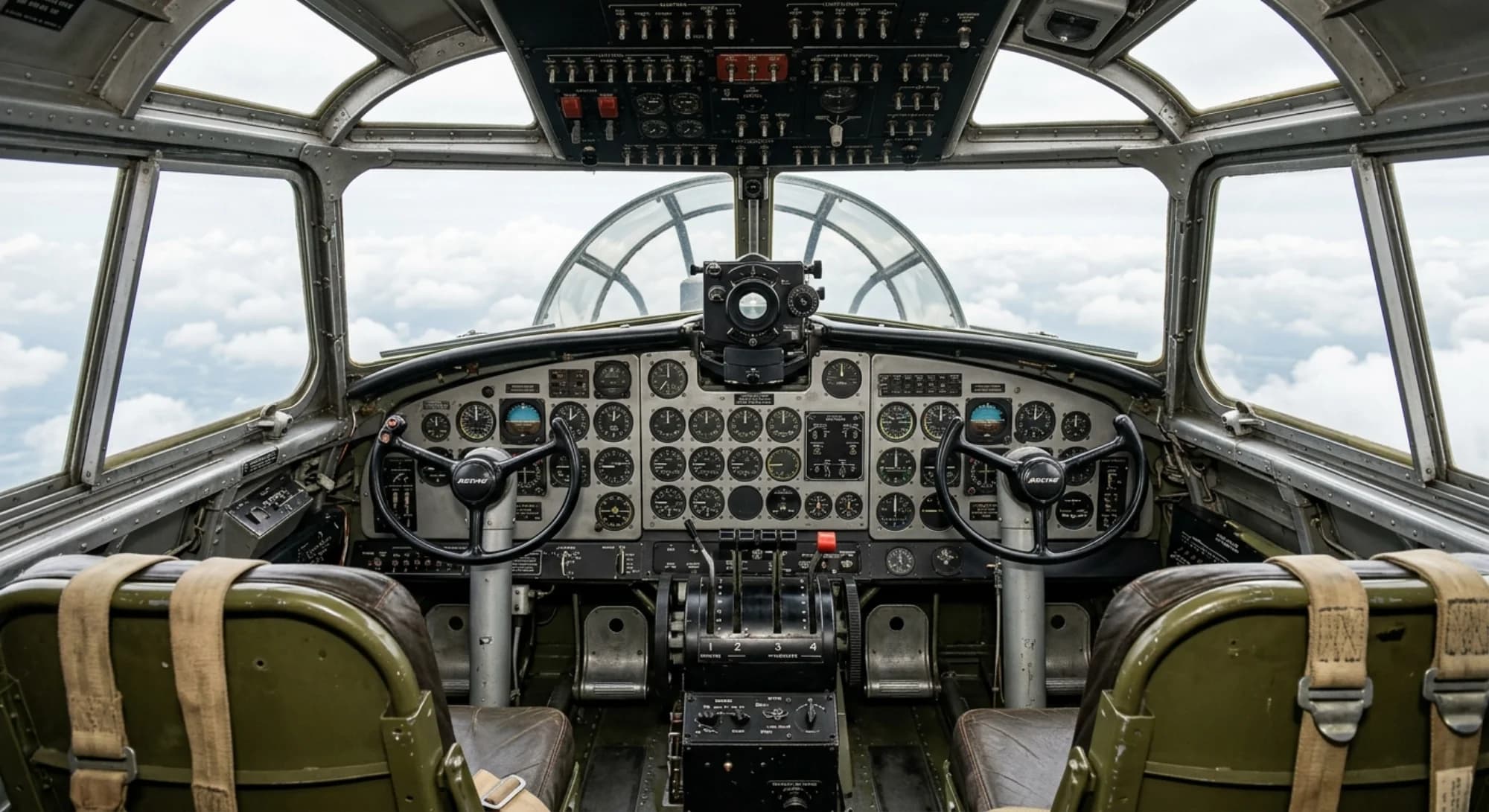
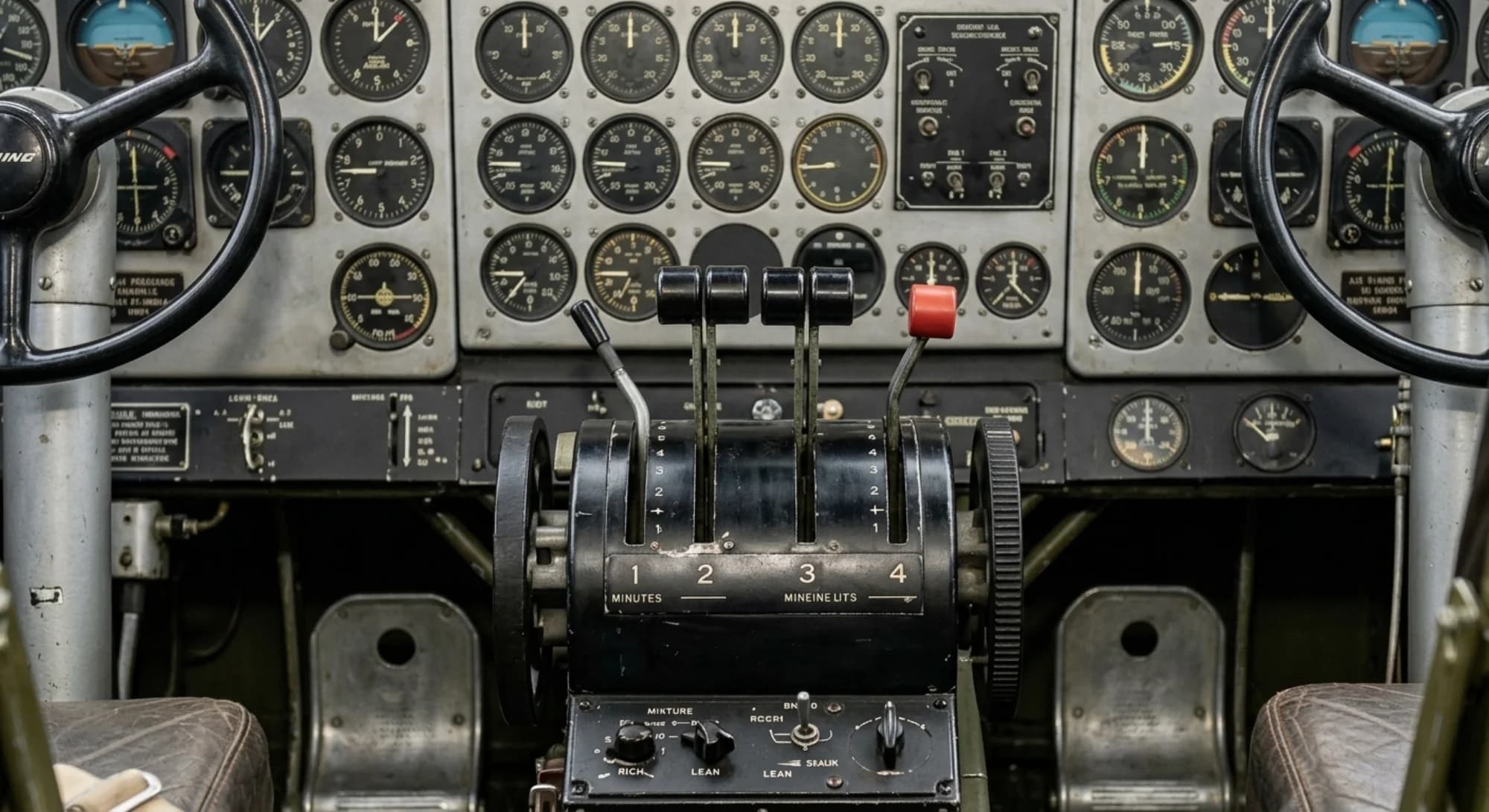
Defined the concept of strategic daylight precision bombing and became the iconic symbol of the American air campaign over Europe.
History
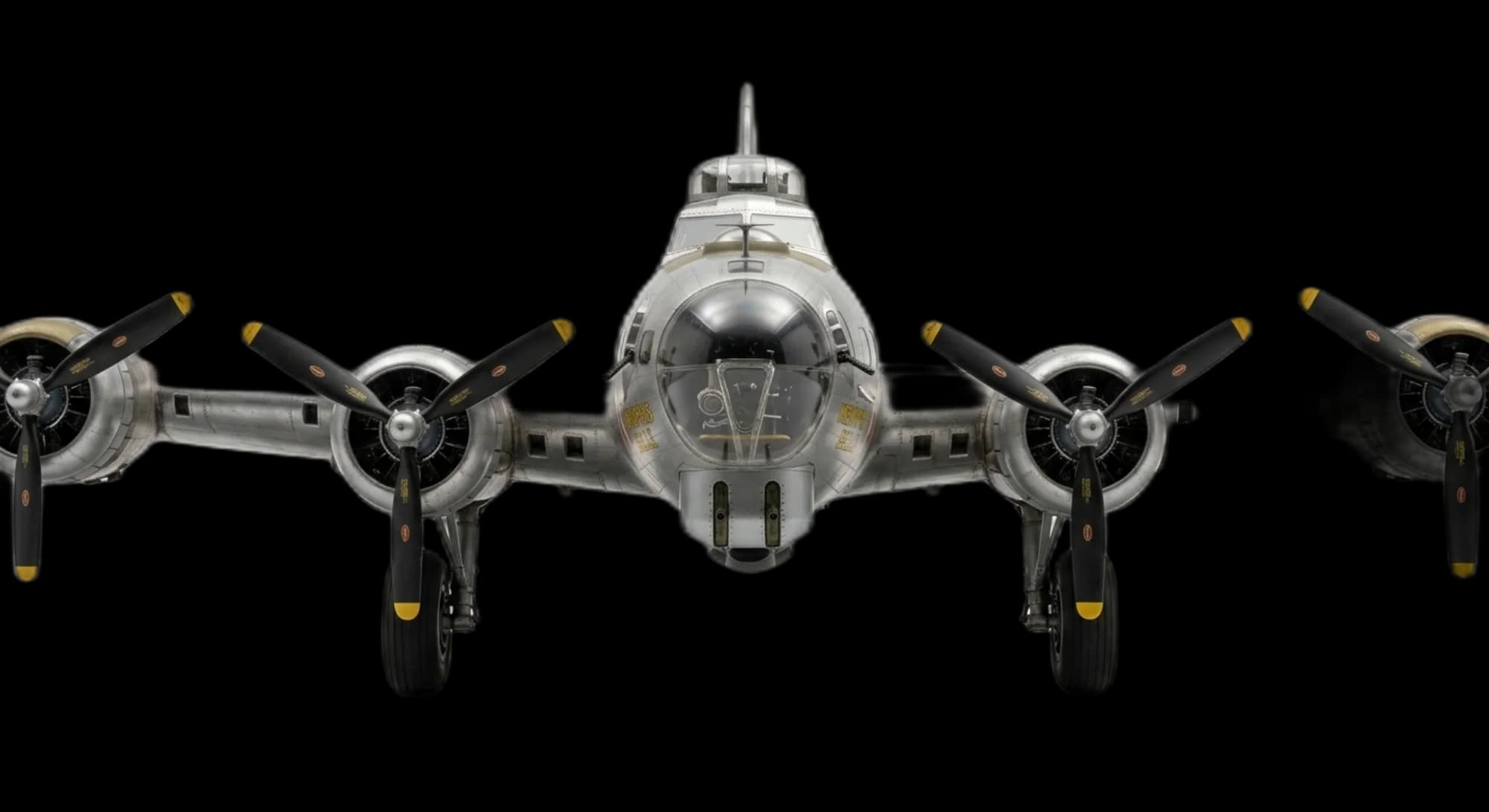
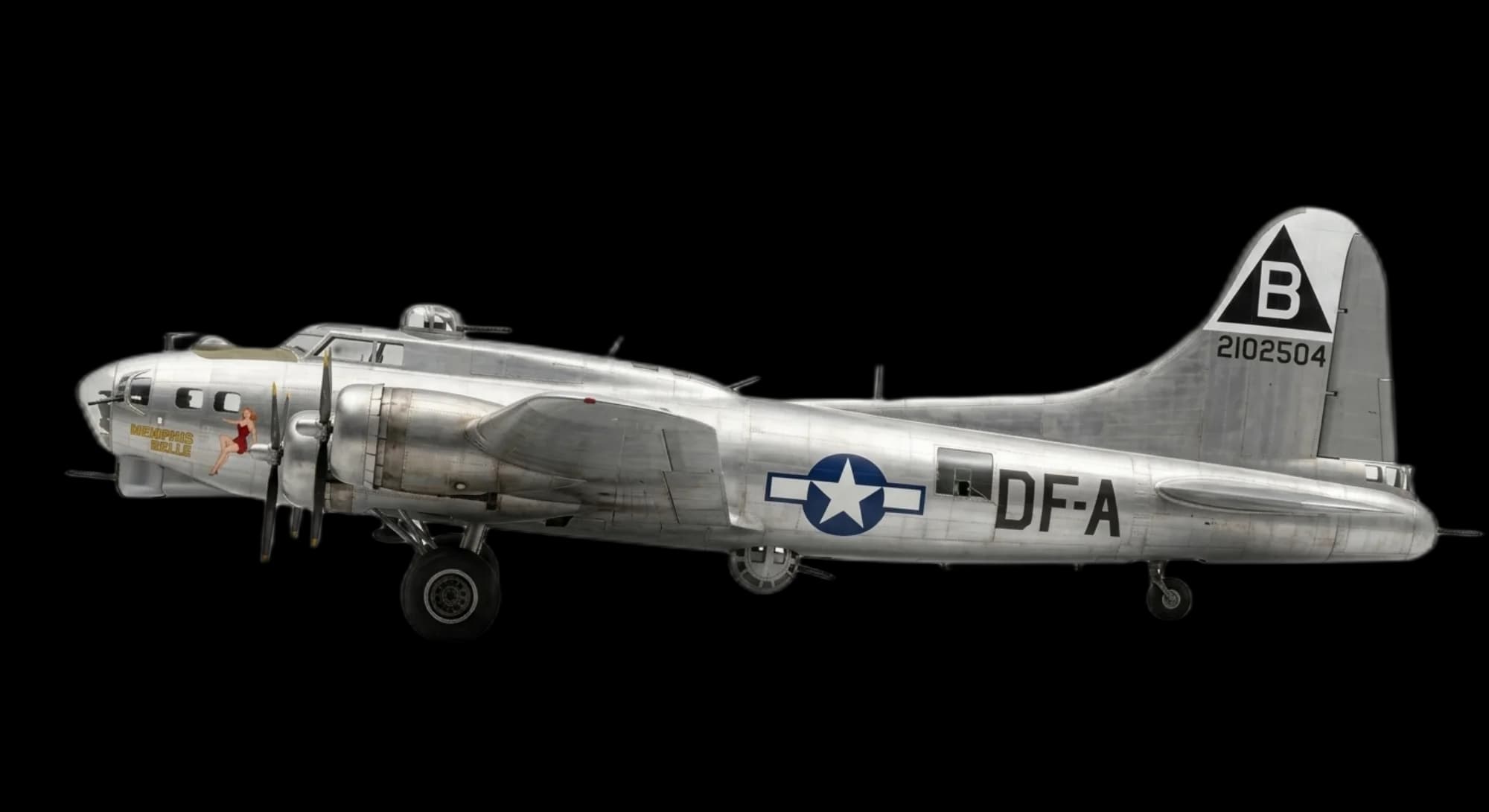
The B-17 was designed in 1934 when Boeing gambled its own money on a four-engine bomber that exceeded the Army Air Corps' twin-engine requirement. The Flying Fortress nickname came from a journalist's description of its bristling gun positions. The B-17G, with its chin turret and 13 machine guns, became the definitive variant. Eighth Air Force B-17s flew deep into Germany in formations of hundreds, absorbing devastating losses while systematically destroying German industry. The Memphis Belle and other famous aircraft became symbols of American determination. Despite horrific casualty rates, the B-17 crews persevered, and the daylight bombing campaign, combined with RAF night raids, ultimately crippled Germany's war machine.
Timeline
Production & Heritage
Technical Specifications
Tags
Designed by E. Gifford Emery